BMW E12 V8 Racecar Build

Navigator_E90

Well-known member
Good morning all,
Busy getting the E12 ready for the weekend - something "small" Ive lacked to do on this car - but done it on the E90, is the front suspension bushes.
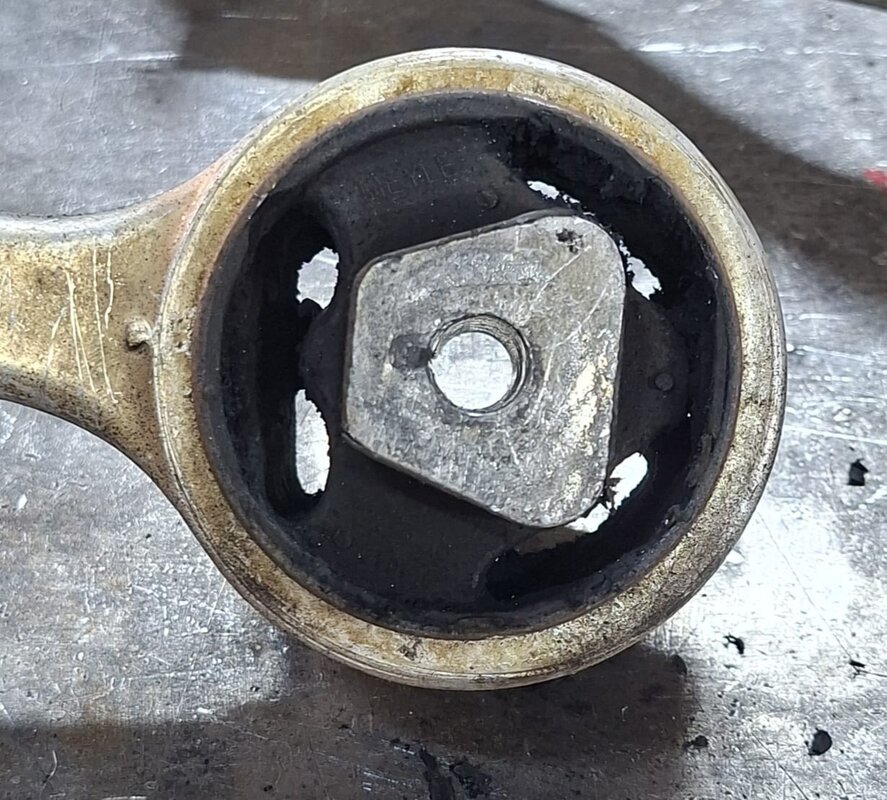
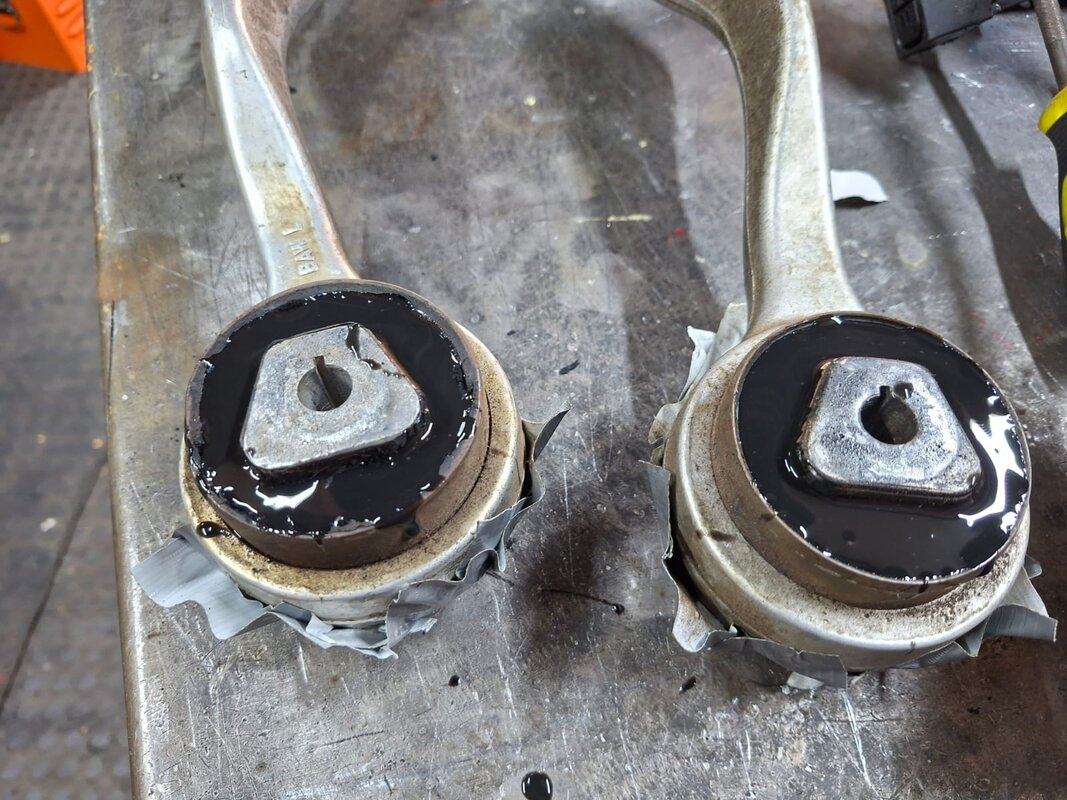
They are NOT designed for track use and give a huge amount of flex under braking and cornering - changing the wheel alignment toe.
Which is obviously not ideal, making the car unsettling and unpredictable under mostly braking but also in high speed corners,
See the attached pictures of the std bush - just cleaned it up to be casted solid.
Even when pressed with my thumb, is scary the amount om movement these bushes give way, cant imagine how much they are flexing under hard braking.
 

Attachments

  • WhatsApp Image 2026-02-20 at 11.28.00.jpeg
    WhatsApp Image 2026-02-20 at 11.28.00.jpeg
    204.6 KB · Views: 12
  • WhatsApp Image 2026-02-20 at 11.28.01.jpeg
    WhatsApp Image 2026-02-20 at 11.28.01.jpeg
    250.6 KB · Views: 12

Navigator_E90

Well-known member
Not everything in a build is wow or glamorous,

However adding all the small stuff - it does make a difference
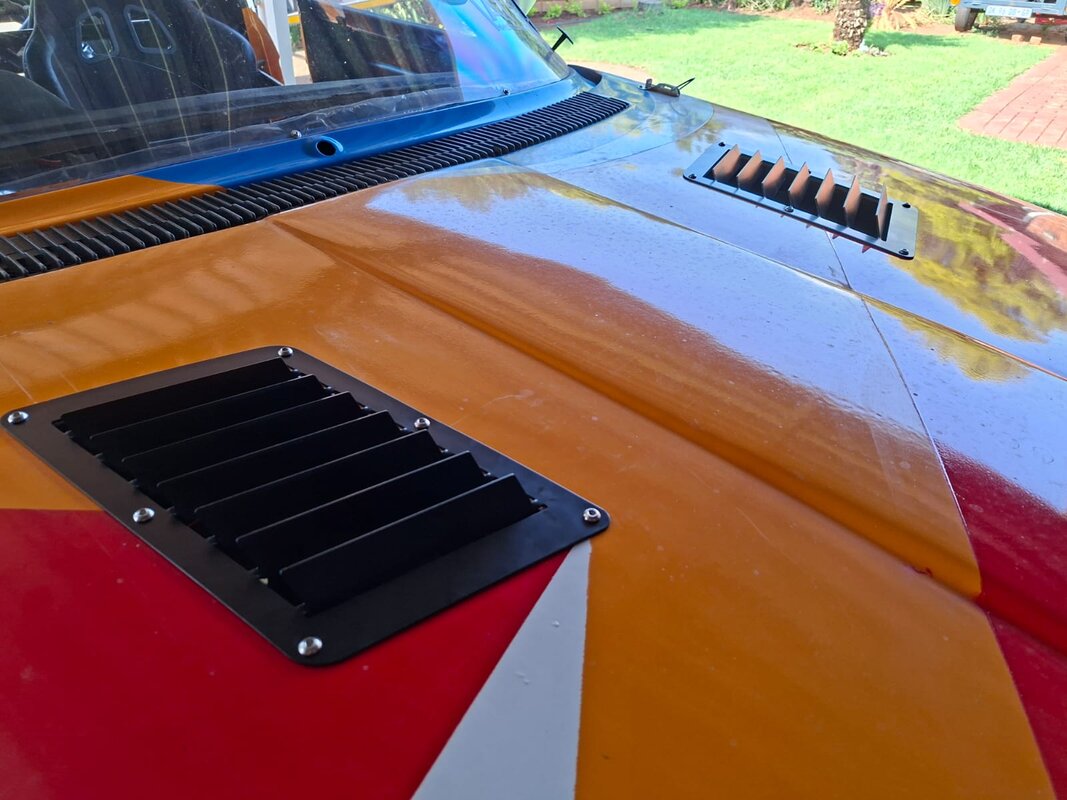
Added 2 bonnet air vents, to assist with under bonnet pressure and heat
Might add a third vent in the center
 

Attachments

  • Bonnet Vents.jpeg
    Bonnet Vents.jpeg
    175.2 KB · Views: 10

Benji

Well-known member
Not everything in a build is wow or glamorous,

However adding all the small stuff - it does make a difference
Added 2 bonnet air vents, to assist with under bonnet pressure and heat
Might add a third vent in the center
Looks good! Did you make these yourself or did you buy them somewhere?

Have you done any empirical analyses of the vents? Sometimes that rearwards area of the bonnet can have quite a high pressure, meaning the vents can do the exact opposite as intended
 

Navigator_E90

Well-known member
Looks good! Did you make these yourself or did you buy them somewhere?

Have you done any empirical analyses of the vents? Sometimes that rearwards area of the bonnet can have quite a high pressure, meaning the vents can do the exact opposite as intended
Ive designed them as per space available and had them laser cut.
There are not many options of the space under the bonnet is a bit limited, so Ive placed them over the main "open" areas on the sides of the V8 in order to have a open flow of air and not restricted in any way.
The ideal is always to have them as close as possible to the radiator, but my airbox is in the way - thus are they fitted a bit deeper as what I would have liked.
The main goal for these vents are not temperature so much, dont have a cooling/temp issue - the radiator and oil cooler is working great.
But the fiber glass bonnet does flex alot due to the under bonnet pressure, so main reason is to release under bonnet pressure - and bonus to get the hot air out.
I should have tested the under bonnet temps before and after - might still do, just close the 2 holes, do a few laps open and close, and see temp difference,
If the bonnet still "flapper" to much - mainly when Im behind another car in turbulent air, might add a third vent, in the middle behind the radiator.
 

Navigator_E90

Well-known member
As frustrating as it's been at times, progress has continued behind the scenes. Some problems have taken a lot longer to solve than expected, but that's all part of building a one-off car like this. There always seems to be another challenge waiting around the corner.

The good news is that there has actually been a lot happening, so it's time to catch everyone up on where the project is and what I've been working on.

As mentioned in my previous update, the ABS remained one of the biggest challenges. I eventually removed the original BMW ABS system because I simply couldn't get it to perform reliably under race conditions. In its place I fitted a Bosch MK60 unit. It's a much simpler system, easier to modify, and requires far fewer inputs to operate without shutting itself down.

Unfortunately, that didn't solve the braking problem. In fact, it made it worse. After fitting the MK60, the ABS became incredibly sensitive, activating far earlier than it should.

This led me down the path of researching whether I should simply remove the ABS altogether. After a lot of reading and advice from people with far more race experience than myself, it became clear that this wasn't really an option with my current brake setup. The combination of very large AP Racing front brakes, standard BMW 645i rear brakes, and a vacuum brake booster meant the front-to-rear brake balance simply wasn't correct. To make matters worse, the brake booster removes much of the mechanical feedback through the pedal, making it difficult to judge exactly what the tyres are doing under heavy braking.

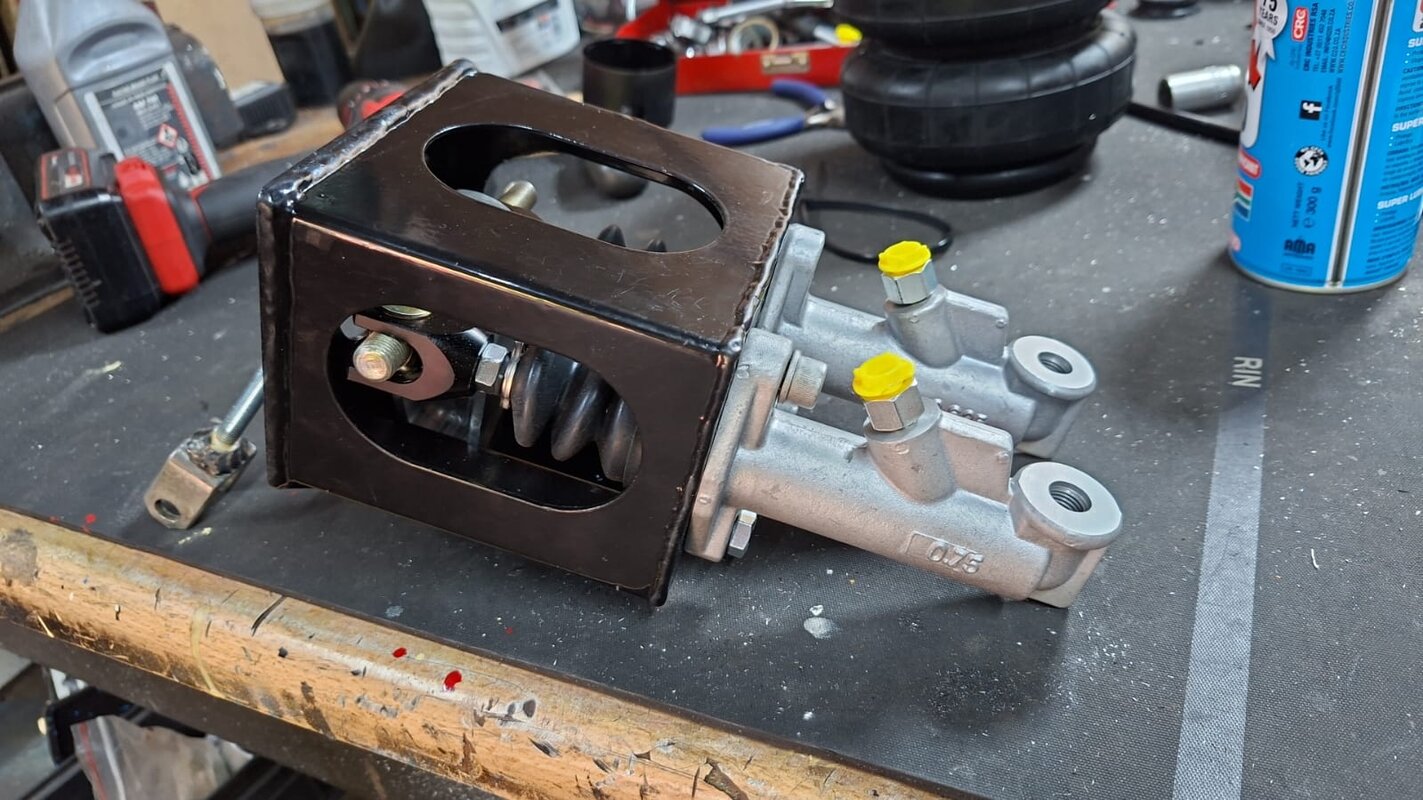
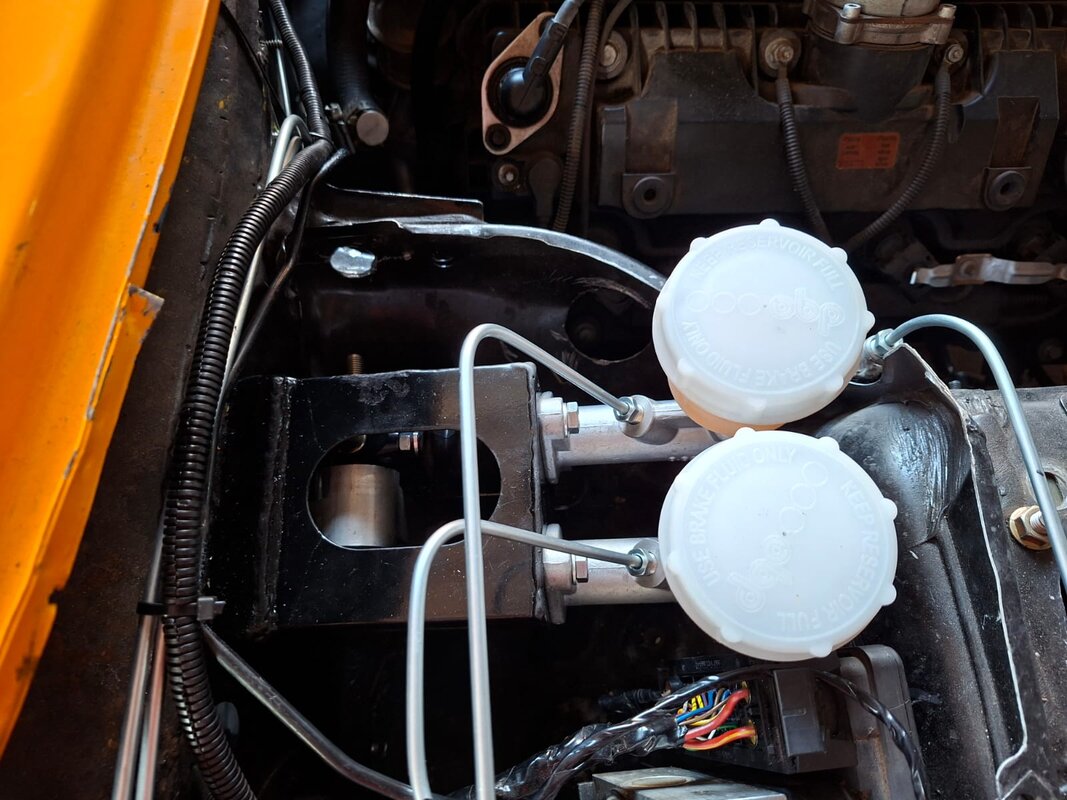
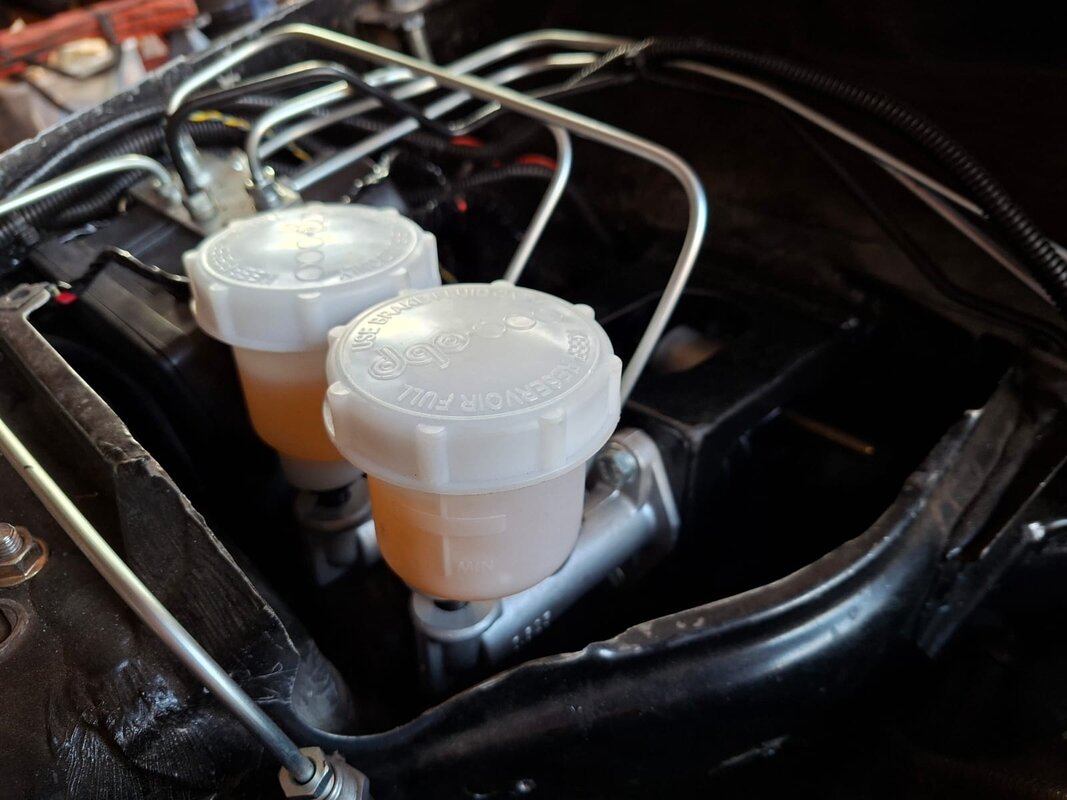
The solution was to convert the car to a dual master cylinder pedal box with an adjustable brake bias system. I removed the brake booster completely and installed a universal pedal box from International Racing Supplies.

Being a universal unit, it wasn't exactly a bolt-in installation. Considerable modification was required to fit it correctly, especially to mount the brake fluid reservoirs as level as possible and package everything neatly inside the car.

Removing the brake booster also meant I had to change the pedal ratio. Without a booster, the original pedal ratio would have required an enormous amount of pedal effort to stop the car. Increasing the pedal ratio naturally increases pedal travel, and initially it felt completely wrong compared to a conventional boosted braking system.

An added advantage is that the brake bias can now be adjusted from inside the car while on track, allowing me to fine-tune the front-to-rear balance as conditions change.

Setting up the system sounds simple... at least in theory.

With all four wheels off the ground, one person slowly applies the brake pedal while another turns each wheel by hand. The goal is for the front wheels to lock first, with the rear wheels only just beginning to bind.

Simple enough... or so I thought.

Once I got the car onto the circuit, everything changed. Weight transfer under hard braking, tyre grip, suspension movement, and overall vehicle dynamics meant the static setup was no longer correct. Initially the rear wheels locked far too easily. After gradually dialing more brake bias to the front, I could clearly feel the balance moving forward until I reached the point where the front tyres locked first. After a few laps, though, I realized just how much feel and modulation I had gained. The control through the brake pedal is honestly incredible.

That was the moment everything made sense.

If you're running a race car without ABS, an adjustable brake bias system isn't really a luxury—it's essential. Every track, tyre, fuel load and setup change affects the optimum brake balance.

For now, however, I still intend to run the MK60 ABS system. When it's working correctly, ABS remains the safer and ultimately faster option. The challenge now is getting it to work properly.

I'll cover that saga, along with a few other ABS related gremlins and some exciting new modifications, in the next update.
 

Attachments

  • Brake system.jpeg
    Brake system.jpeg
    194.6 KB · Views: 8
  • Brake system1.jpeg
    Brake system1.jpeg
    197.5 KB · Views: 8
  • Brake system2.jpeg
    Brake system2.jpeg
    135.5 KB · Views: 8

Benji

Well-known member
As frustrating as it's been at times, progress has continued behind the scenes. Some problems have taken a lot longer to solve than expected, but that's all part of building a one-off car like this. There always seems to be another challenge waiting around the corner.

The good news is that there has actually been a lot happening, so it's time to catch everyone up on where the project is and what I've been working on.

As mentioned in my previous update, the ABS remained one of the biggest challenges. I eventually removed the original BMW ABS system because I simply couldn't get it to perform reliably under race conditions. In its place I fitted a Bosch MK60 unit. It's a much simpler system, easier to modify, and requires far fewer inputs to operate without shutting itself down.

Unfortunately, that didn't solve the braking problem. In fact, it made it worse. After fitting the MK60, the ABS became incredibly sensitive, activating far earlier than it should.

This led me down the path of researching whether I should simply remove the ABS altogether. After a lot of reading and advice from people with far more race experience than myself, it became clear that this wasn't really an option with my current brake setup. The combination of very large AP Racing front brakes, standard BMW 645i rear brakes, and a vacuum brake booster meant the front-to-rear brake balance simply wasn't correct. To make matters worse, the brake booster removes much of the mechanical feedback through the pedal, making it difficult to judge exactly what the tyres are doing under heavy braking.

The solution was to convert the car to a dual master cylinder pedal box with an adjustable brake bias system. I removed the brake booster completely and installed a universal pedal box from International Racing Supplies.

Being a universal unit, it wasn't exactly a bolt-in installation. Considerable modification was required to fit it correctly, especially to mount the brake fluid reservoirs as level as possible and package everything neatly inside the car.

Removing the brake booster also meant I had to change the pedal ratio. Without a booster, the original pedal ratio would have required an enormous amount of pedal effort to stop the car. Increasing the pedal ratio naturally increases pedal travel, and initially it felt completely wrong compared to a conventional boosted braking system.

An added advantage is that the brake bias can now be adjusted from inside the car while on track, allowing me to fine-tune the front-to-rear balance as conditions change.

Setting up the system sounds simple... at least in theory.

With all four wheels off the ground, one person slowly applies the brake pedal while another turns each wheel by hand. The goal is for the front wheels to lock first, with the rear wheels only just beginning to bind.

Simple enough... or so I thought.

Once I got the car onto the circuit, everything changed. Weight transfer under hard braking, tyre grip, suspension movement, and overall vehicle dynamics meant the static setup was no longer correct. Initially the rear wheels locked far too easily. After gradually dialing more brake bias to the front, I could clearly feel the balance moving forward until I reached the point where the front tyres locked first. After a few laps, though, I realized just how much feel and modulation I had gained. The control through the brake pedal is honestly incredible.

That was the moment everything made sense.

If you're running a race car without ABS, an adjustable brake bias system isn't really a luxury—it's essential. Every track, tyre, fuel load and setup change affects the optimum brake balance.

For now, however, I still intend to run the MK60 ABS system. When it's working correctly, ABS remains the safer and ultimately faster option. The challenge now is getting it to work properly.

I'll cover that saga, along with a few other ABS related gremlins and some exciting new modifications, in the next update.
Awesome update, that looks like a proper racey brake setup :cool:

Damn you! Now I need to get this exact setup! How much did it cost? I am running a vacuum system with ABS delete on the E34 and you never really know what the brakes are going to do, so you always give them 70% input...too many tires have died from lockups

I really hope your brake problems are solved now 🍻 How is the mechanical bias set? Is there a remote knob in the car?
 

Navigator_E90

Well-known member
Awesome update, that looks like a proper racey brake setup :cool:

Damn you! Now I need to get this exact setup! How much did it cost? I am running a vacuum system with ABS delete on the E34 and you never really know what the brakes are going to do, so you always give them 70% input...too many tires have died from lockups

I really hope your brake problems are solved now 🍻 How is the mechanical bias set? Is there a remote knob in the car?
The twin master unit "Universal" was around R5500, I bough the adjustment cable with knob to adjust from inside the car, just to make the process easier and quicker - otherwise you will do lap... pop into the pits, adjust... go out again... until its sorted,
What also makes the onboard nice, is to fine tune when doing lap times, or when the surface change and require more front bias.

Did my own piping as all the hard lines had to be changed, as well as the clutch reservoir, as the oem reservoir included the clutch reservoir

The bias system is not just to adjust the brake bias, although it might sound like the primary goal of the unit, however the pedal feel gains is as important, even more as the boosted system give you no warning or feel
 
Top